
Welcome to The Manager’s Playbook, my personal newsletter where I share insights from Music Executives and Artists for aspiring and emerging music managers, executives and artists on how to navigate the music industry. This newsletter is brought to you by Mauricio Ruiz.
THE MANAGER’S PLAYBOOK PODCAST
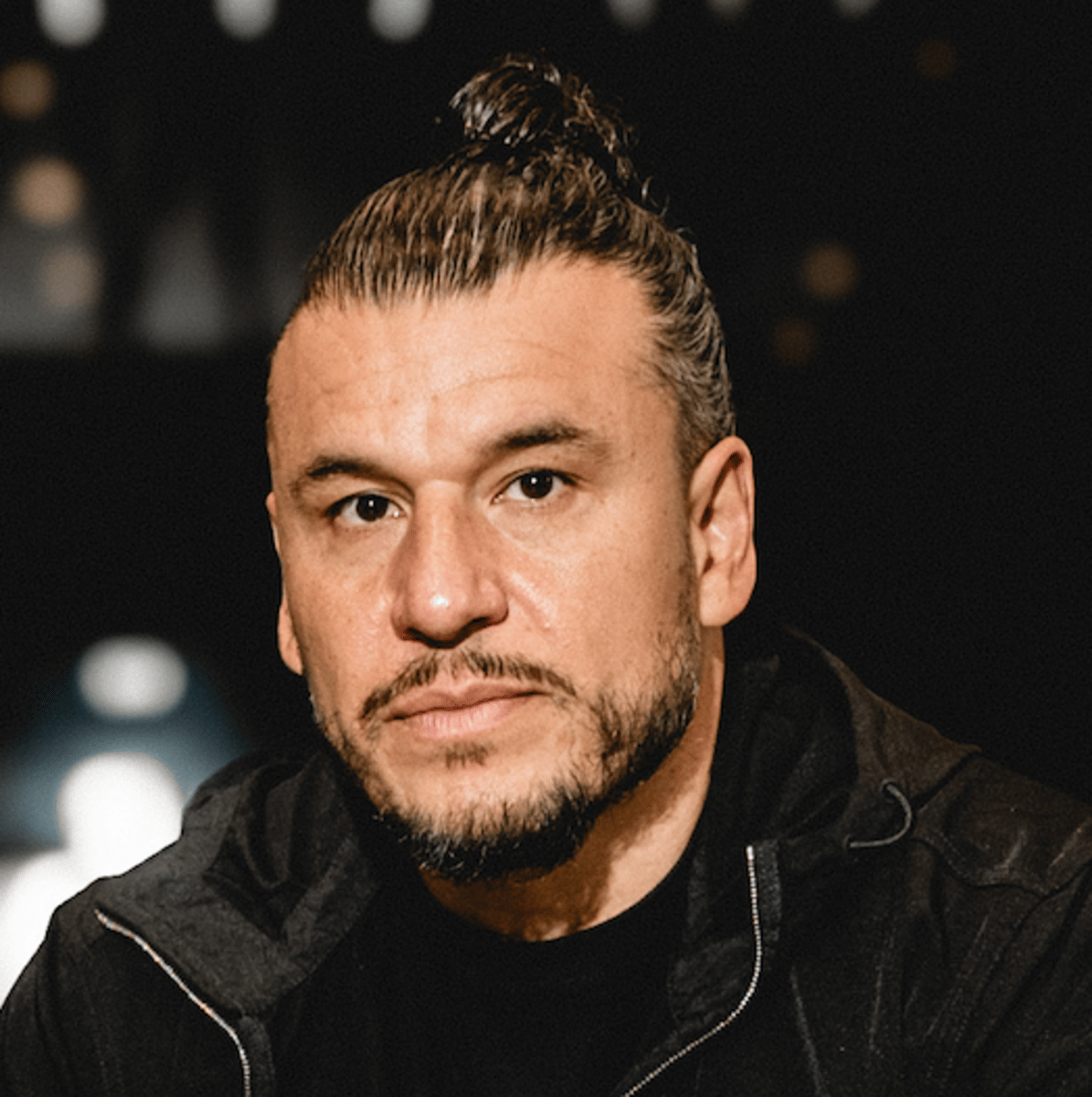
(FEAT. Mike Biggane)

As much as you may care about an artist… you also need to get paid.
That line from Mike Biggane hit me in the chest because it’s the part everybody whispers, but nobody wants to headline.
We’re walking into 2026 with more music being released than ever, more “opportunity” than ever, and somehow… less clarity than ever. Teams are thinner. Budgets are tighter. Attention is chopped up into little microscopic pieces. And the old playbook (album cycles, radio ladders, “just get the playlist”) is not only outdated.
It’s borderline disrespectful to your time.
Which is exactly why I wanted Mike as the first episode of 2026.
For context: Mike is the guy who introduced New Music Friday to the world, ran point as Global Head of Curation at Spotify, then went to UMG as EVP of Music Strategy & Tactics, and now he’s building Big Effect, a company focused on solving the hardest problem in modern music:
How do you stay visible long enough… to convert attention into actual fans?
Mike put it plainly: artists aren’t breaking the way they used to because “no one can get in front of an audience long enough to convert into fans.”

So let’s talk about what’s changing, what’s coming in 2026, and what artists and managers should be paying attention to…
…Especially if you’re trying to build a real career without a massive label machine (or while realizing the machine isn’t what it used to be).
KEY TAKEAWAYS

New Music Friday Doesn’t Break Artists Like It Used To (And That’s Not a Hot Take)
Mike literally helped build the early version of the new release engine. He was waking up at 3AM every week, scanning blogs, piecing together release schedules because labels weren’t exactly eager to help Spotify in the early days.
And the cover-art story is classic: first week they couldn’t get an approved image, used something generic, then next week Mike basically said “f**k it,” put the artist on the cover, and the numbers jumped.
But the bigger point isn’t nostalgia.
It’s this:
Spotify moved from one-to-many programming to one-to-one personalization, and once that happened, the “new release window” became a weaker lever than the industry wants to admit.
2026 implication:
If your whole strategy is “we need NMF,” you’re building on a foundation that’s already shifting under your feet.


The 28-Day Trap Is Cooking Careers
Mike breaks down how we’re still treating releases like it’s a sales-era “window,” chasing an immediate win in the first 28 days.
But here’s the part managers feel in their bones:
that type of pressure creates gimmicks.
It creates artificial “moments” that spike and disappear. And it trains everyone (artist, manager, partner) to panic when growth is supposed to be gradual.
Mike said it best: we’ve gotten into this mindset of “we gotta go viral right away, or we’re dead.”
2026 implication:
The winners won’t be the ones who have a pop-off week. They’ll be the ones who can stay in front of people long enough (with discipline) for love to form.

Labels Aren’t “Bad.” They’re Rebuilding Their Business Model (Without Telling You)
This part of the convo was refreshing because it wasn’t “labels are evil.” It was more accurate than that.
Mike basically says: the economics changed, personalization changed distribution, and the macro industry realized a lot of the old marketing workflows don’t return the way they used to.
So what happened?
They shifted focus toward merch, direct-to-consumer, and superfan products, while everything else tries to get “sorted out” with AI.
And yes, look around. The layoffs? It’s often marketing/services roles.
2026 implication:
Stop planning your career around what a label used to be.
Plan around what the business is becoming: fan economics + efficiency + systems.

Fans Aren’t Just the Audience Anymore. They’re the Marketing Team.
This is where things get spicy.
Mike speaks about a world where fans create derivatives and help market/promote the original, especially as gen-AI and “superfan platforms” evolve.
He also connects this to the broader shift back toward the roots of the music business: songwriter/publisher value, and new economic models that may treat rights holders differently than streaming did.
2026 implication:
The strongest artists won’t just have listeners.
They’ll have participants.
And managers? You’re not just building an audience funnel. You’re building a community engine.

“A Record Label in Your Pocket” (AKA: Systems Are the New Team)
This is the one that will matter most to the people reading this who feel like they can’t build a real team yet.
Mike’s whole mission with Big Effect is essentially: unify data, turn it into intelligence, connect it to automation, so artists can navigate like a GPS with a “north star metric.”
He’s describing a future where AI doesn’t replace your taste. It replaces the bottlenecks and helps you build repeatable decision-making, even when you don’t have 12 department heads.
And he’s blunt: independent artists aren’t going to get stardom from a traditional label the way they imagine; they’ll get it from tools that teach them how to market and promote themselves based on real signals.
2026 implication:
If you don’t have a team, you need a system.
If you do have a team, you still need a system, so the team doesn’t burn out.

The 2026 Predictions
Here’s what I’d bet on, based on Mike’s lens and what I’m seeing in the field:
Prediction 1: “New Release” strategy becomes “Always-On” strategy
The release is no longer the event. The conversion window is.
Prediction 2: Superfans become the center of the revenue conversation
More D2C, more merch bundles, more experiences and more access.
Prediction 3: Managers become mini-labels (without calling themselves that)
Development, content, brand, partnerships, touring strategy, rollouts; this is already the job.
Prediction 4: AI becomes the “second hire” for most teams
Not to make your art but to make your operations smarter.
Prediction 5: The artists who win will build “participation,” not just “reach”
If the fan can’t do something with the world you’re building, you’re leaving distribution on the table.

Mike Biggane
If you’re overwhelmed, start here:
Pick a North Star Metric: something you can actually influence weekly
Build a content system: (not content “ideas”) cadence, templates, repeatable series
Run marketing like a lab: track attribution, kill what doesn’t move the needle
Optimize for conversion, not virality: visibility long enough = fans
Design for superfans: access, community, drops, experiences
Mike’s quote is the headline for 2026 because it’s the reality for every great person in this business:
You can care deeply. You should care deeply.
But care without a sustainable model turns into resentment.
And I don’t want that for you.
We’re not in the album sales model anymore, according to Mike, and we need a new mindset for what the music business looks like going forward.
Let’s build smarter this year.
1:1 CONSULTATIONS WITH RUIZ

Mauricio Ruiz
I’m offering private 1-on-1 sessions for artists, managers, and execs who want real, practical advice on how to move their careers forward.
With 16 years in the music business and experience working with some of the biggest artists and executives in the world, I can share insights, strategy and ways to execute the pain points in your career as it currently stands.
Book your private consultation below.
WRAPPING UP..
If you found today's read enjoyable, please consider sharing it with a friend. Crafting these newsletters consumes hours each week, so your support in sharing with peers means a lot.
And if you have any thoughts to share, feel free to hit reply. I'd love to hear your feedback.
Bio
I’m Mauricio Ruiz, the host and creator of The Manager’s Playbook podcast, dedicated to demystifying the world of music management, and Founder/CEO of 8 Til Faint, an Artist Management company with over 5 billion audio streams worldwide. Our past and current clients include Grammy nominated, Juno Award winning multi-instrumentalist and singer/songwriter Jessie Reyez, Skratch Bastid and more.
I am also the Co-Founder of Mad Ruk Entertainment, a content agency with over 3 billion long form video streams worldwide. Our client list includes The Weeknd, Eminem, and Celine Dion, along with renowned brands like Nike, Pernod Ricard and the NBA.
Follow me on IG @mauroisruiz
Follow me on LinkedIn
Follow the pod on Youtube
